Rice Architecture

25HM_X09
PHYSICAL MODEL


DIGITAL MODEL


PROCESS


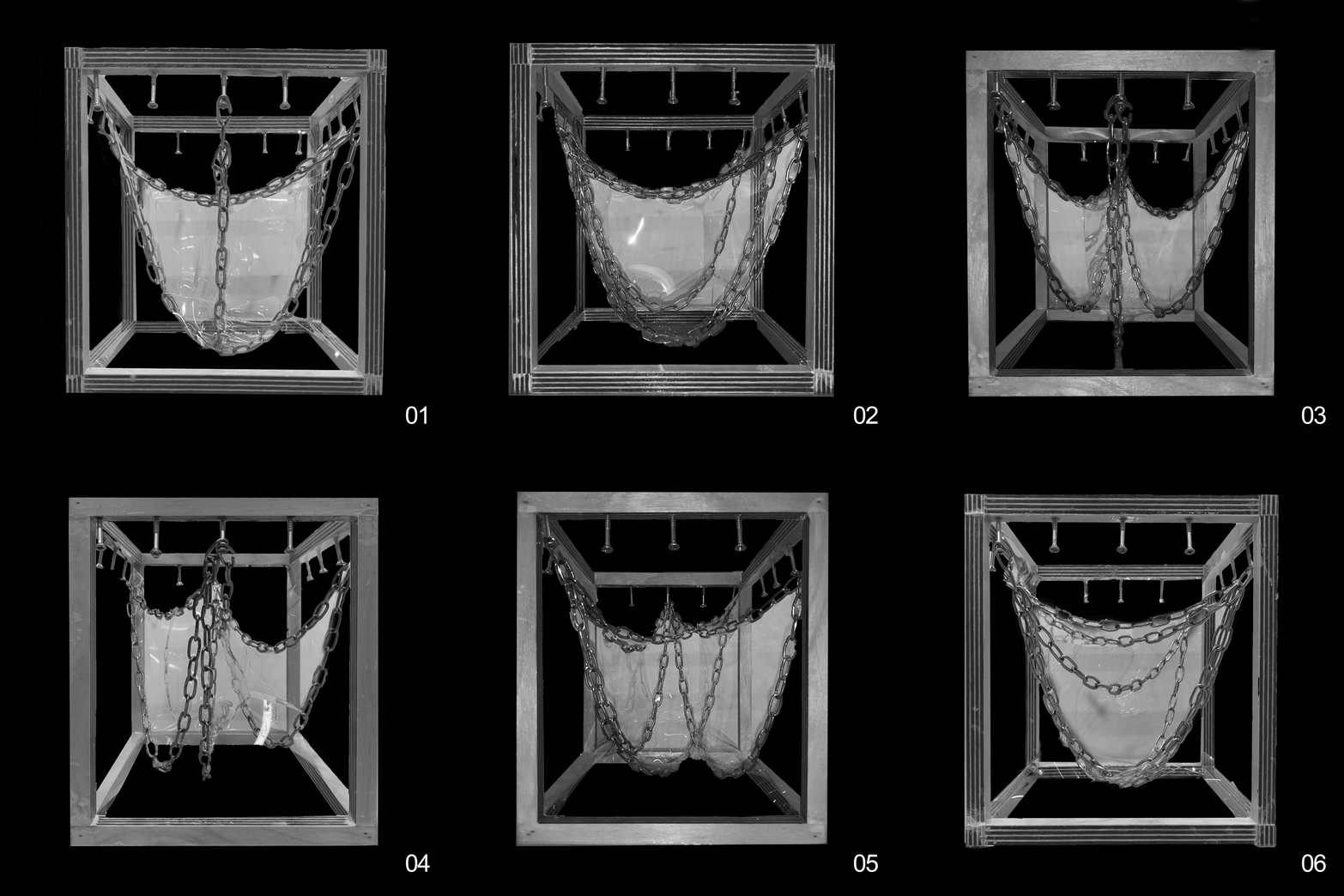
The catenary curve, as a vector, is commonly used in architectural representation as a generative diagram to produce total structural compression. Our project positions the catenary curve not as a vector, but as a method of exploring its potential voids. By intersecting these curves a terliary figure is produced, one that exists in three dimensions where all components could subsequently be in compression; the precedent of this expression is best seen in Gaudi's tapered, near topological, vaults and columns: La Sagrada Familia, the Crypt at Colonia Guel, and even his proposal for a skyscraper in Manhattan dubbed "Hotel Attraction". By creating a square frame, we point-located the catenary curves and hung a sequence of chains that touched at their vertex. We then dipped this frame into a vat of bubble solution to document our desired void space. The experiment yielded a complex lattice of minimal surfaces, influenced by several factors: the frame, the chains' curves, and the chain links themselves. Variation came with repositioning the curve locations in plan and adding additional chains. Based on aesthetic preference alone, we popped specific surfaces to either generate our "pure diagram" or allow nuance between the pure diagram and the other objects of influence.