Rice Architecture

26HM_X09
Hutch Ferebee, Don Leung, Simon Roderick, Estefania Soto
PHYSICAL MODEL


DIGITAL MODEL


PROCESS


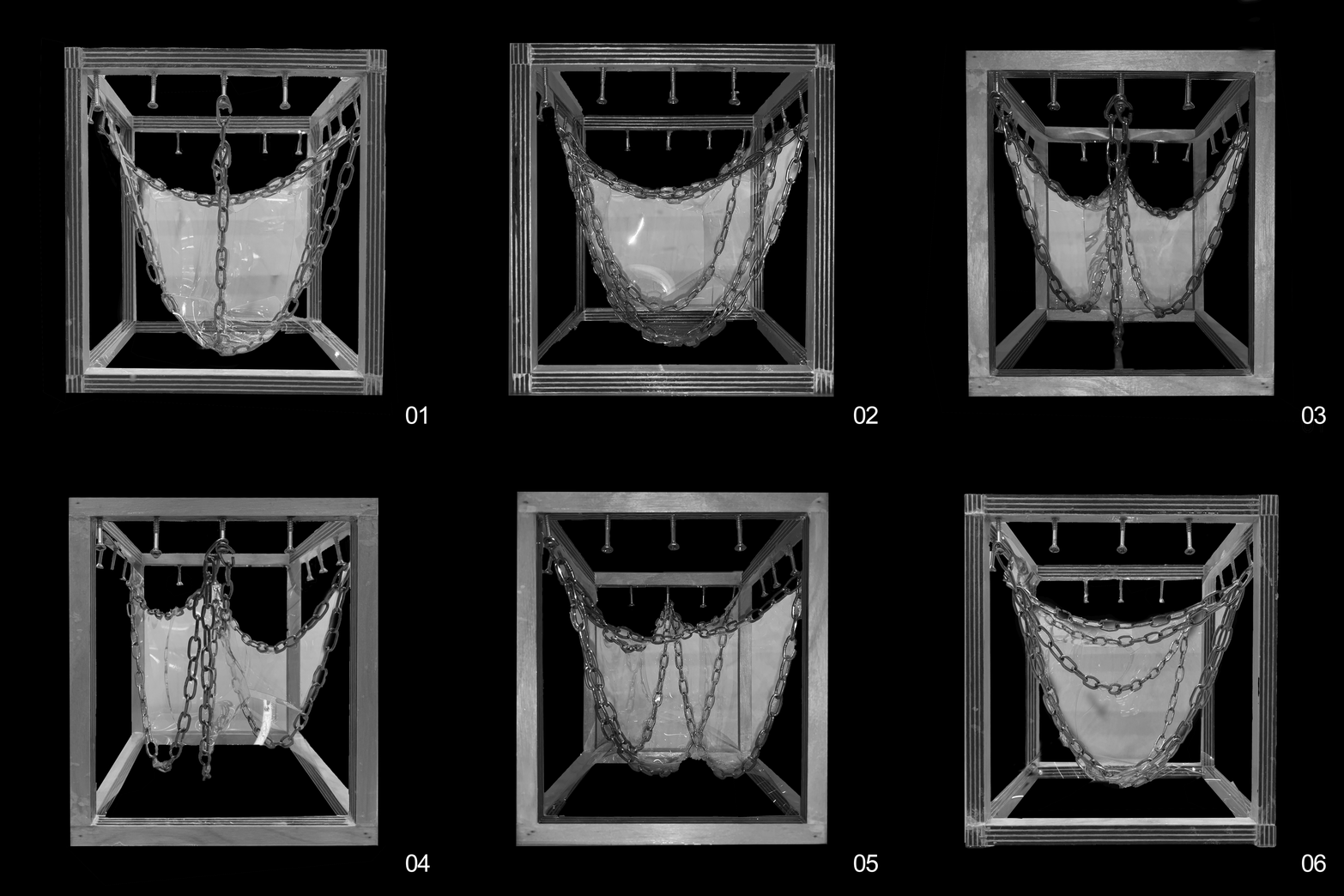
The catenary curve, as a vector, is commonly used in architectural representation as a generative diagram to produce total structural compression. By intersecting these curves a terliary figure is produced, one that exists in three dimensions where all components could subsequently be in compression; the precedent of this expression is best seen in Gaudi's tapered, near topological, vaults and columns: La Sagrada Familia, the Crypt at Colonia Guel, and even his proposal for a skyscraper in Manhattan dubbed "Hotel Attraction". By creating a square frame, we point-located the catenary curves and hung a sequence of chains that touched at their vertex. We then dipped this frame into a vat of bubble solution to document our desired void space. The experiment resulted in a complex lattice of minimal surfaces influenced by several factors: the frame, the curve of the chains, and the chain links themselves. Variation came with repositioning the curve locations in plan and adding additional chains.